
Inverter vs Non-Inverter Air Conditioners — What’s the Real Difference?

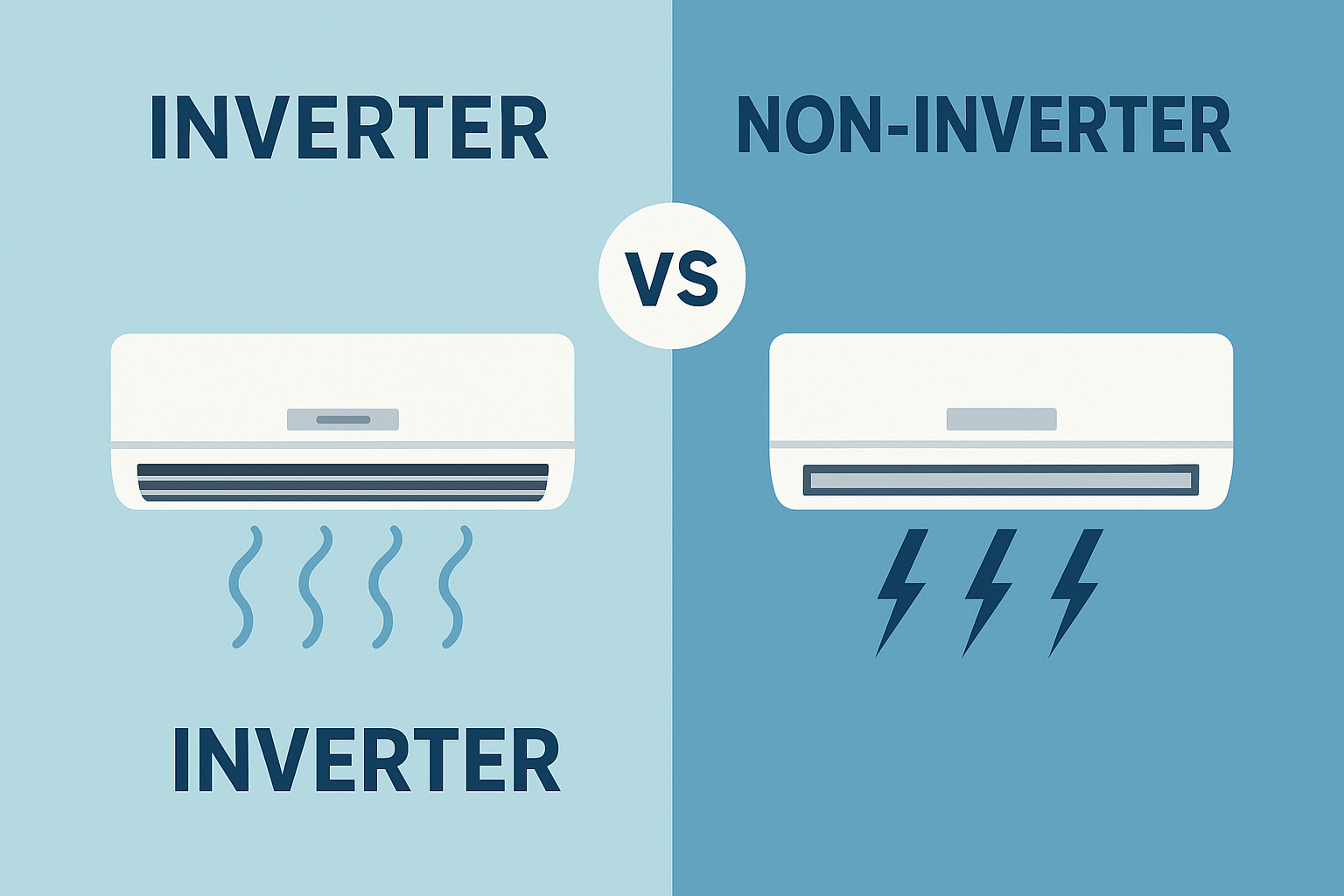
If you’re planning to buy an air conditioner, chances are you’ve come across the terms “inverter” and “non-inverter” quite a few times. And let’s be honest — at first, it sounds like just another fancy tech buzzword, right? But once you actually understand what it means, you’ll realize it makes a big difference in how your AC performs, how much you spend on electricity, and even how comfortable your room feels.
So, let’s break it down in simple terms.
What’s the Main Difference Between Inverter and Non-Inverter ACs?
It all comes down to how the compressor works.
- Inverter ACs come with a variable-speed compressor that adjusts its speed based on how much cooling is needed.
- Non-Inverter ACs, on the other hand, have a fixed-speed compressor that either runs at full power or turns off completely.
This single difference affects everything — from your electricity bill and noise level to how comfortable your room feels.
What Exactly Is an Inverter Air Conditioner?
Think of an inverter AC like a smart AC. It automatically adjusts how hard it works based on the temperature of your room.
Here’s how it works:
An inverter AC has a variable-speed compressor, which means it can run faster or slower depending on how much cooling is needed. When the room is hot, it runs faster. Once it’s cool enough, it slows down just enough to maintain that temperature.
It doesn’t keep switching off and on — it just keeps running efficiently in the background.
How does this help?
- You get steady cooling without sudden temperature changes.
- It uses less electricity because it doesn’t restart the compressor over and over.
- The compressor experiences less wear and tear, meaning a longer lifespan.
While the inverter AC price might be higher upfront, you’ll notice the difference in electricity bills over time. Typically, a 1.5-ton inverter AC consumes around 0.8 to 1.2 units per hour, while a non-inverter model uses 1.5 to 1.7 units per hour. That’s nearly 30–40% energy savings every month!
So, if you use your AC for long hours (say, more than 6–8 hours daily), an inverter AC is definitely worth the investment.
And What About Non-Inverter ACs?
A non-inverter AC, on the other hand, works in a more old-school way. The compressor has only two modes: on or off.
When the room gets warm, it kicks on and cools things down. When the temperature is reached, it shuts off completely. This cycle repeats again and again.
You’ll often hear that “click” sound and notice slight changes in the room temperature — cooler, then a little warmer, then cooler again.
Pros of Non-Inverter ACs:
- Lower initial cost — they’re more budget-friendly to buy.
- Simpler maintenance — parts and servicing are usually cheaper.
Cons:
- They consume more power due to the constant on/off cycle.
- Temperature fluctuates, so you might feel slightly warmer or cooler at times.
- Shorter compressor life because of frequent start-stop strain.
If you only use your AC for a few hours a day or occasionally, a non-inverter AC can be a smart, cost-effective choice.
The Key Differences (Without the Tech Talk)
| Feature | Inverter AC | Non-Inverter AC |
| Compressor Speed | Adjustable | Fixed (On/Off) |
| Energy Efficiency | High (uses less electricity over time) | Low (uses more electricity) |
| Cooling Comfort | Consistent and steady | Temperature fluctuates |
| Noise Level | Quieter | Louder due to frequent switching |
| Best For | Long-hour usage | Short, occasional use |
| Price | Higher upfront cost | Lower initial cost |
A Simple Way to Picture It
Imagine driving a car:
- A non-inverter AC is like driving in city traffic — stop, start, stop, start.
- An inverter AC is like cruising smoothly on a highway — steady speed, less fuel, and a smoother ride.
That’s pretty much how the difference feels in your electricity bill and comfort.
Energy Efficiency & Power Consumption
If you’re wondering “Which AC consumes less electricity?”, the answer is clear — inverter ACs.
Because they regulate compressor speed and avoid frequent restarts, inverter ACs can save up to 40–50% on energy bills compared to non-inverter units. Over months of regular use, these savings can easily offset the higher purchase price.
Cooling Performance
When it comes to cooling comfort, inverter ACs again take the lead.
They cool faster at the beginning, then maintain the temperature smoothly without overworking. Non-inverter ACs, however, cool in bursts — full blast when on, then nothing when off — which can make the room temperature feel uneven.
So if you prefer steady, quiet, and efficient cooling, go for an inverter model. But if you just want quick cooling for short periods, a non-inverter will do just fine.
Maintenance & Longevity
Inverter ACs come with advanced technology, so they might need professional servicing from time to time, especially for components like the circuit board or variable-speed compressor. However, since they run more smoothly and efficiently, they usually last longer and experience fewer mechanical issues.
Non-inverter ACs are simpler to repair but may need more frequent servicing due to higher wear and tear on the compressor.
So, Which One Should You Go For?
Here’s a quick guide to help you decide:
| Your Usage | Best Option |
| On a budget and use AC occasionally (2–3 hours/day) | Non-Inverter AC |
| Use AC for long hours (8+ hours/day) | Inverter AC |
| Want to save on monthly electricity bills | Inverter AC |
| Need quick cooling for short periods | Non-Inverter AC |
Simply put:
👉 If you use your AC for long hours every day, go for an inverter.
👉 If your usage is limited, a non-inverter can fit your needs and budget.
Final Thoughts
Both inverter and non-inverter air conditioners can keep you cool — the choice really depends on how long and how often you use your AC.
If you’re running it all day or for long stretches, go with the inverter. If you’re only using it occasionally, the non-inverter will do just fine.
Either way, choosing the right one for your lifestyle will save you both money and energy in the long run.